DNA Test Confirms Dr Umar Un Nabi as Suspect in the Red Fort Car Blast
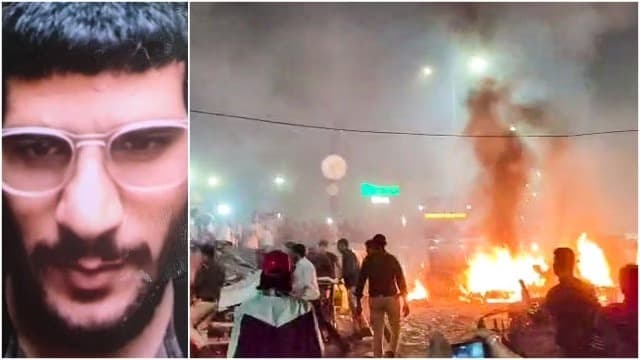
DNA Test Confirms Dr Umar Un Nabi as Suspect in the Red Fort Car Blast
Key Facts
• On 10 November 2025, a vehicle exploded near the Red Fort area in Delhi, killing at least 12 people and injuring dozens more.
• Forensic teams recovered human remains from the blast-site vehicle (a Hyundai i20) and used DNA profiling to identify the driver/suspect.
• The DNA samples of Dr Umar Un Nabi’s mother and brother were collected and matched with the remains; the match is reported as conclusive, confirming Dr Umar as the person behind the wheel at the time of the explosion.
• Investigators have thus marked Dr Umar as deceased in the blast (his remains being part of the match) though the precise circumstances (immediate driver, suicide bomber or car bomber, or remote activation) are still under investigation.
Background of the Suspect
Dr Umar Un Nabi hailed from Koil village in Pulwama district, Jammu & Kashmir, and was working as an assistant professor at the Al Falah University School of Medical Sciences & Research Centre in Faridabad.
According to police sources, Dr Umar’s movements came under scrutiny after a major seizure of explosives (approx. 2,900 kg of ammonium nitrate and related materials) in the Faridabad region.
CCTV footage and other records show the suspect parking near Sunehri Masjid in Old Delhi around 3:19 pm on the day of the blast, and later proceeding toward the Red Fort Gate No. 1 traffic signal, where the explosion occurred.
Significance & Security Implications
The forensic verification of Dr Umar’s identity is considered a major breakthrough in the investigation:
- It allows investigators to treat the incident with greater clarity (i.e., as a deliberate terror incident rather than an accidental blast).
- It strengthens the link to a possible terror module involving highly-educated individuals (doctors) rather than the stereotypical profile of militants.
- Given the target (heritage site, heavy civilian presence, Old Delhi area) and the method (vehicle borne IED), the incident underscores a severe threat vector for urban, high-density zones.
India’s Home Minister, Amit Shah, has directed all agencies to hunt down every person responsible and handed over the investigation to the National Investigation Agency (NIA).
Ongoing Investigation & Questions Remaining
- Forensic agencies are now tracing the origin of the explosives used in the blast, including whether the materials were part of the seizure earlier in Faridabad and whether they came from across state lines or via international logistics.
- Investigations are looking into whether Dr Umar acted alone or was part of a larger network. The module under scrutiny reportedly involves multiple doctors, logistics handlers and cross-border communication.
- Though Dr Umar’s remains are identified, it is yet to be confirmed whether the explosion was carried out by him as a suicide bomber or whether the device detonated by remote/automatic means. The exact motive, coordination and target choice remain under probe.
- Law-enforcement agencies are also assessing whether this attack was a standalone incident or part of a broader plan (including possible follow-up strikes).

Impact & Response
- The blast near one of India’s most iconic monuments has triggered a major review of security protocols for heritage sites and crowded urban zones.
- It has raised concern over radicalisation among professional and educated strata (such as medical professionals) and the infiltration of terror networks into unexpected social circles.
- Public and diplomatic messaging emphasise zero-tolerance; the government has stated that all involved will face full wrath of law.
Concluding Thoughts
The confirmation of Dr Umar Un Nabi as the person who drove (and apparently detonated) the vehicle that exploded near the Red Fort is a pivotal moment in the investigation. It does not, however, close the case — many questions remain about how the plot was orchestrated, whether more strikes were planned, who the handlers were, and how such modules operate within professional landscapes.
In the coming days, the focus will be on:
- Tracing the explosive supply chain (who procured, transported, stored and rigged the device)
- Identifying co-conspirators (especially any remaining cells, accomplices and overseas handlers)
- Reviewing security lapses (why was a high-risk area used, how did the vehicle get churched in, and what can be improved)
- Public safety measures (reassurance, improved surveillance, tighter checks around heritage zones and crowds)
As the investigation unfolds, the forensic identification via DNA marks a key milestone — but by itself it is just one piece of a much larger puzzle.
Stay informed with our latest news and updates.
Get breaking news and curated stories delivered to your inbox every day.
Be the first to know what's happening around the world.