Security forces demolish the house of accused in Delhi blast; two Kashmiri doctors detained in Uttar Pradesh
Headline: Security forces demolish the house of accused in Delhi blast; two Kashmiri doctors detained in Uttar Pradesh
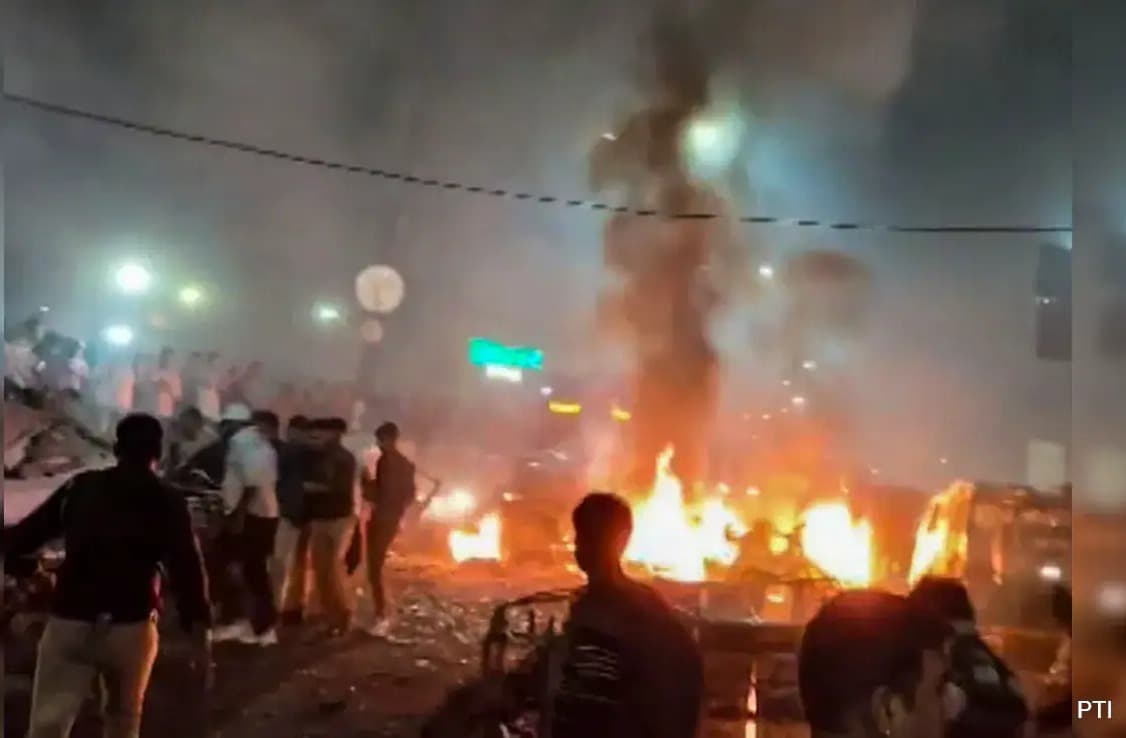
New Delhi / Pulwama, 14 Nov 2025 – In the wake of the deadly car explosion near the Red Fort metro station in Delhi earlier this week, security agencies have taken fresh, decisive action as part of the rapidly unfolding counter-terror investigation.
House demolition in J&K
In the early hours of Friday, security forces in Pulwama district of Jammu & Kashmir demolished the two-storey house of Dr Umar Un Nabi (also referred to as Umar Mohammad), the man identified as the driver of the explosive-laden Hyundai i20 that detonated near the Red Fort, killing at least 13 people.
The house, located in the village of Koil in Pulwama, was cleared of its occupants prior to the demolition and then brought down using an improvised explosive device (IED) in a controlled operation overnight between Thursday and Friday.
Authorities describe this demolition as a strong message and part of a broader counter-terror response to the incident.
Detentions in Uttar Pradesh
Simultaneously, investigators have widened their net. Two doctors from J&K who had pursued medical education/training in UP have been detained in connection with the probe. According to the latest reports:
- Dr Mohammed Arif Mir, a 32-year-old cardiology postgraduate at GSVM Medical College, Kanpur (originally from Anantnag, J&K) was taken into custody.
- Dr Farooq Ahmad Dar, age ~34, an assistant professor at GS Medical College, Hapur, also originally from J&K, was detained.
Both are reported to have ties (via education/employment) to Al‑Falah University in Faridabad, which is now under scrutiny as part of the terror module investigation.

What’s known so far about the blast & network
The car blast took place near the Red Fort metro area on 10 November and has so far claimed 13 lives and wounded many more.
Investigations have uncovered:
- The driver of the car has been identified through DNA matching to Dr Umar’s mother.
- A “white-collar” terror module appears to be in play: professionals, including doctors from J&K, based in Faridabad and elsewhere, allegedly linked to the banned groups Jaish‑e‑Mohammed (JeM) and Ansar Ghazwat‑ul‑Hind.
- Large caches of explosives (reported to be about 2,900 kg) were found in Faridabad and neighbouring locations.
- The probe is now interstate—J&K, Haryana, Delhi, Uttar Pradesh—and international links (for example Turkey) are being examined.
Implications and outlook
- The demolition of Dr Umar’s family home signals a zero-tolerance posture by security agencies. It is meant to deter future support networks and send a clear message that infrastructure (even residential) used by terror suspects can be targeted.
- The detentions in UP show how widely the network may be spread—medical institutions, academic employment, and across states. Investigators are mapping finance trails, education/employment connections, and movement patterns (CCTV/routing relating to the car’s journey).
- The incident raises concern about a new category of terror module—radicalised professionals embedded within benign-looking institutions, which may be harder to detect.
- For Delhi and its environs the immediate security posture remains heightened: patrols, vehicle checks, suspicious-vehicle triage, and coordination between local police, ATS, and central agencies.
- Politically, this incident comes at a sensitive time: national security is front-and-centre, cross-border tensions may rise if Pakistan-based linkages are formally established, and domestic pressure for accountability and prevention will mount.
What to watch
- Confirmation of how exactly the explosives were procured, transported, stored, and deployed.
- Identification of the full network: how many individuals, recruitment and financing methods, institutional links.
- Whether this was a suicidal attack, a failed larger plan (reports suggest multiple vehicles were being prepared) or part of a cascading coordinated strike across cities.
- The role of Al-Falah University and other academic institutions in Delhi-NCR/UP as recruitment or planning hubs, and how regulatory oversight may change.
- Relations with Pakistan and regional security dynamics: if JeM or AGuH handlers abroad are confirmed, the diplomatic and military consequences may be significant.
- Official judicial/legal actions: arrests, charges under the Unlawful Activities (Prevention) Act (UAPA), asset seizures, and policy responses on radicalisation in professional sectors.
Conclusion
The demolition of the house of Dr Umar Un Nabi and the detention of two Kashmiri doctors in Uttar Pradesh underscore the scale of the probe into the Delhi car blast near the Red Fort. What began as a tragic explosion is now being treated as a sophisticated terror plot, with links across states and professions, broadening the scope far beyond a singular incident. Security agencies are mobilising resources, intelligence, and legal instruments; the coming days and weeks will be critical in determining how deeply the network was embedded and how effectively it can be dismantled.
Would you like me to pull together live updates with a minute-by-minute timeline or background on how terror modules exploit professional sectors like medical education?
Stay informed with our latest news and updates.
Get breaking news and curated stories delivered to your inbox every day.
Be the first to know what's happening around the world.