China urges U.S. to “earnestly abide” by global nuclear testing ban after Trump orders weapons testing
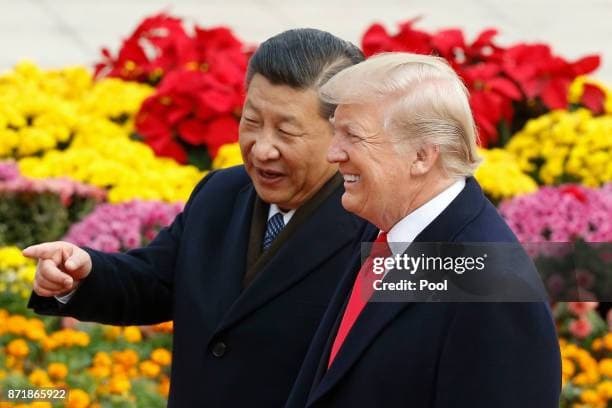
China urges U.S. to “earnestly abide” by global nuclear-testing ban after Trump orders weapons testing
In a stark rebuke of recent U.S. nuclear policy signals, Beijing on Thursday called on the United States to uphold its international commitments by continuing a decades-old moratorium on nuclear weapons testing. The demand comes in direct response to Donald Trump’s surprising directive: the Pentagon is to “immediately” resume testing of U.S. nuclear weapons.
What happened
- On Oct. 30 2025, Trump posted on his social media platform that he had instructed the U.S. Department of Defence to begin nuclear weapons testing “on an equal basis” with Russia and China, noting that the U.S. “has more Nuclear Weapons than any other country” and that “because of other countries’ testing programs, I have instructed … to start testing our Nuclear Weapons … That process will begin immediately.”
- The announcement came just ahead of a meeting in Busan, South Korea, between Trump and Xi Jinping of China, heightening the diplomatic significance.
- China’s Foreign Ministry responded by urging the U.S. to “earnestly abide by the obligations of the comprehensive nuclear-test-ban treaty and its commitment to a ban on nuclear testing, and take concrete actions to safeguard the global nuclear disarmament and non-proliferation system and safeguard global strategic balance and stability.”
- A supportive framing: China maintained that it adheres to a policy of no first use of nuclear weapons, peaceful development, and suspension of explosive testing, implicitly positioning itself as the responsible actor.
Why it matters
- Global arms-control norms at stake
For more than three decades, major nuclear powers (with the exception of North Korea) have adhered to a de facto moratorium on explosive nuclear-weapons tests. The U.S. has not conducted a full nuclear test since 1992.
A U.S. return to such testing, or even a move signifying it, could undermine the credibility of the Comprehensive Nuclear‐Test‐Ban Treaty (CTBT) regime and spur other states to follow suit, weakening non-proliferation efforts. - Strategic signalling and escalation risk
Trump’s statement emphasizes parity with China and Russia, naming them explicitly as competitors. That shifts rhetoric from deterrence to overt competition, which could provoke reciprocal action from adversaries.
China’s warning highlights this risk: if the U.S. departs from the moratorium, it may trigger a renewed cycle of nuclear tests and strategic instability. - Diplomatic timing and the China-U.S. relationship
The announcement’s timing—just before Trump’s summit with Xi Jinping—added a diplomatic jolt to the bilateral relationship. At the same time, China had agreed to temporarily suspend rare-earth export curbs to the U.S., showing a calibrated mix of cooperation and pressure. - Ambiguity of what “testing” means
It remains unclear whether the directive refers to full nuclear detonation tests or less drastic “non-explosive” system tests. The U.S. Energy Secretary has since clarified that planned tests involve “non-critical” components, not chain-reaction detonations.
Regardless of the exact nature of the testing, the shift in language itself sends a strong signal—one that China appears to view as destabilising.
China’s message to the U.S.
- China’s spokeswoman emphasized that Beijing “always embarks on the journey of peaceful development” and will “stand ready to work with all parties to uphold the CTBT and uphold non-proliferation regime and disarmament.”
- By placing responsibility on the U.S. to follow established norms, China frames itself as the defender of strategic stability—while implicitly warning of the consequences if Washington chooses a different path.
- The language “earnestly abide” signals that China expects not just rhetorical commitment but concrete action—i.e., refraining from resuming explosive testing, supporting non-proliferation frameworks, and avoiding steps that erode global nuclear governance.
What might happen next
- Other nuclear-armed states may respond. If the U.S. resumes testing, even in a limited form, Russia or China could interpret that as justification to conduct tests of their own, sparking a chain reaction. Analysts have already warned of this dynamic.
- Non-proliferation regime could weaken. States watching the major powers may feel less bound by testing bans or other arms-control agreements, potentially accelerating weapons development in more volatile regions.
- Domestic and international backlash. Within the U.S. and globally, civil society, disarmament groups and some governments are likely to raise alarms, citing risks to global security and the precedent this sets. For example, a Japanese atomic-bomb survivors group called the U.S. order “contrary to the efforts by nations around the world striving for a peaceful world without nuclear weapons.”
- Diplomatic and treaty implications. The U.S. has signed but not ratified the CTBT. A shift toward testing may further complicate the treaty’s prospects or spur renewed efforts to renegotiate arms-control frameworks with China and Russia included.
- Strategic recalibration. Countries such as India, Pakistan or others with latent nuclear ambitions could interpret the move as lowering the barrier to test explosions, possibly prompting fresh deliberations about their own posture.
Conclusion
The Chinese demand that the U.S. “earnestly abide” by the global nuclear-testing ban underscores the gravity of President Trump’s directive to resume weapons testing. What might have been framed as a domestic defence update has instead rippled across international diplomacy, triggering concerns about arms-control erosion, strategic competition and heightened nuclear risk.
For the U.S. and China, this moment offers both challenge and opportunity. If Washington clarifies that no full-scale detonations are planned and reaffirm its support for non-proliferation, the global community may breathe a sigh of relief. But if the move leads to a genuine resumption of explosive testing, the long-standing norm against nuclear tests may fracture—ushering in a new chapter of competing nuclear postures.
Stay informed with our latest news and updates.
Get breaking news and curated stories delivered to your inbox every day.
Be the first to know what's happening around the world.